
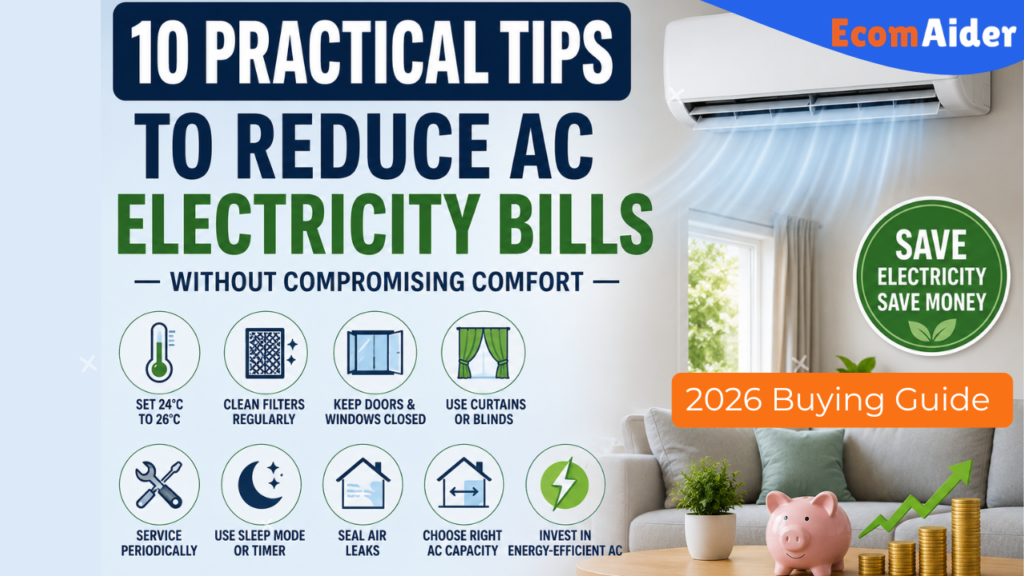
Summer brings Soaring Temperatures, but it also brings Higher Electricity Bills. For many Households, Air Conditioners are among the Biggest Contributors to Monthly Power Consumption. The Good News is that you don’t always Need to Sacrifice Comfort to save Electricity. By Adopting a few Smart Habits and Maintaining your AC Properly, you can Improve Efficiency and Reduce Unnecessary Energy usage.
If you’re Planning to buy a new AC, don’t Forget to Read our Detailed Guide on 3 Star vs 4 Star vs 5 Star AC to understand How Star Ratings affect Electricity Consumption and Long-term Running costs.
How to Reduce AC Electricity Bill is one of the most Common questions during the Summer Season. With Rising Electricity Costs and Longer AC usage, many Households are Looking for Practical ways to Reduce Power Consumption without Compromising Comfort. The Good News is that a Few Simple Habits and Regular Maintenance can Significantly improve your AC’s Efficiency and Help Lower your Monthly Electricity Bill.
In this Article, we’ll Explore 10 Practical and easy-to-follow Tips that can Help reduce your AC Electricity bill without making your Home Uncomfortable.
Quick Checklist:
✅ Set Temperature between 24°C and 26°C
✅ Keep Doors and Windows closed
✅ Use Curtains or Blinds
✅ Clean Air Filters Regularly
✅ Use Sleep Mode or Timer
✅ Seal Air Leaks
✅ Choose the correct AC capacity
✅ Service your AC Periodically
✅ Reduce Indoor Heat Sources
✅ Consider an Energy-efficient AC
While Buying a Higher-Rated AC can Reduce Electricity Consumption, your Daily usage Habits are Equally Important. Our Guide on 3 Star vs 4 Star vs 5 Star AC: Which One Saves More Electricity? Explains the Differences in Detail.
How to Reduce AC Electricity Bill: 10 Practical Tips
1. Set Your AC Temperature Between 24°C and 26°C
One of the Easiest ways to Reduce Electricity Consumption is to Avoid setting Extremely Low Temperatures.
Many people set their AC to 18°C or 20°C Expecting Faster Cooling. In Reality, the AC works Harder to Reach and maintain those Temperatures, Increasing Electricity usage.
For most homes, a Setting between 24°C and 26°C offers a Good Balance between Comfort and Energy Efficiency.
2. Keep Doors and Windows Closed
Leaving Doors or Windows open allows Cool Air to escape and Hot Air to enter the Room.
As a Result, your AC Compressor has to work Longer to Maintain the Desired Temperature.
Before switching on your AC:
- Close Windows Properly
- Keep Doors Shut
- Minimize Unnecessary Entry and Exit
Simple Habits like these can Improve Cooling Efficiency.
3. Use Curtains or Blinds During the Day

Direct Sunlight can Significantly Increase Indoor Temperatures.
Using Curtains, Blinds, or Reflective Window Coverings helps Reduce Heat Entering the Room, allowing your AC to Cool more Efficiently.
Rooms Exposed to Strong afternoon Sunlight can specially Benefit from this Simple step.
4. Clean the Air Filters Regularly
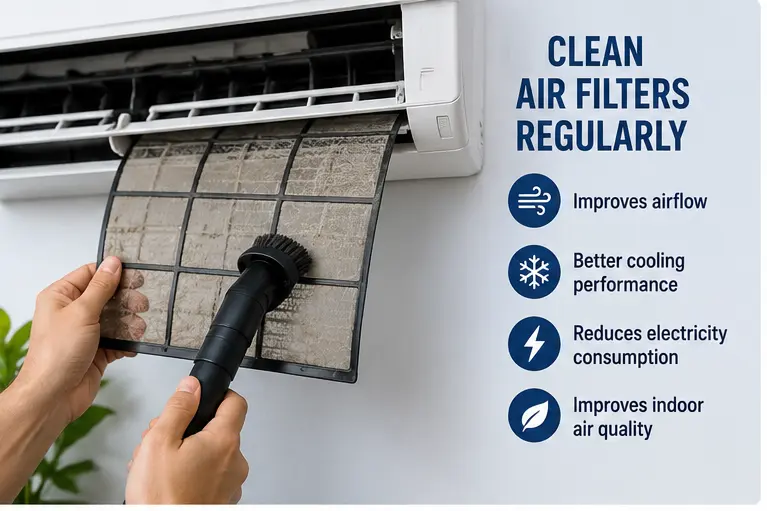
Dirty Air Filters Restrict Airflow and Force the AC to work Harder.
Cleaning the Filters every Few weeks during Heavy usage can:
- Improve Cooling Performance
- Maintain Proper Airflow
- Reduce Unnecessary Energy Consumption
- Improve Indoor Air Quality
Always Follow the Manufacturer’s Cleaning Instructions.
5. Use Sleep Mode or Timer Features
Modern Air Conditioners often Include Sleep Mode or Timer Functions.
These Features Automatically adjust Operation during the Night and can Help avoid Unnecessary Cooling while you’re asleep.
Instead of Running Continuously for many Hours, your AC can Operate more Efficiently based on your Schedule.
6. Seal Air Leaks Around Doors and Windows
Small Gaps around Doors and Windows allow Cooled Air to escape and Warm Air to enter.
Check for:
- Loose window Frames
- Door Gaps
- Damaged Seals
Simple Weather Stripping or Sealing Solutions can Improve Room Insulation and Reduce Cooling Losses.
7. Choose the Right AC Capacity
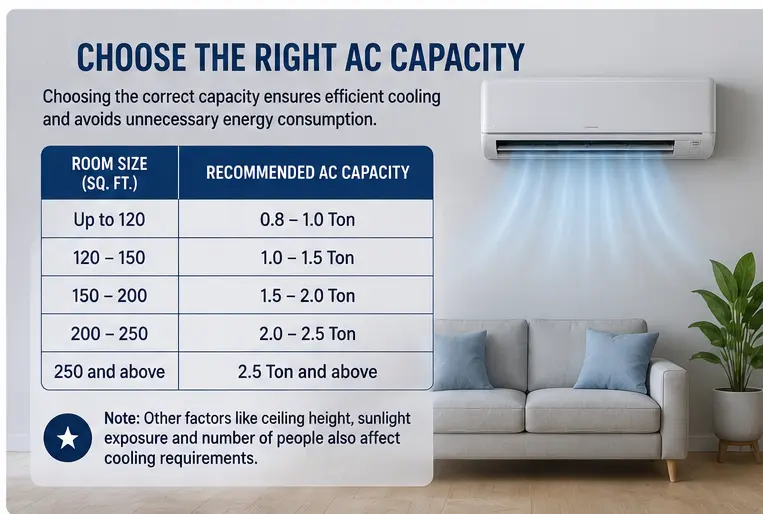
An AC that is too small may run Continuously without Cooling Effectively.
An oversized AC may Cool the Room quickly but may not always operate as Efficiently for Humidity Control or Comfort.
Choosing the correct Capacity based on Room Size and usage Conditions helps Improve Efficiency and Performance.
When Buying a new AC, consult the Manufacturer’s Recommendations or Seek Professional Guidance.
8. Service Your AC Periodically
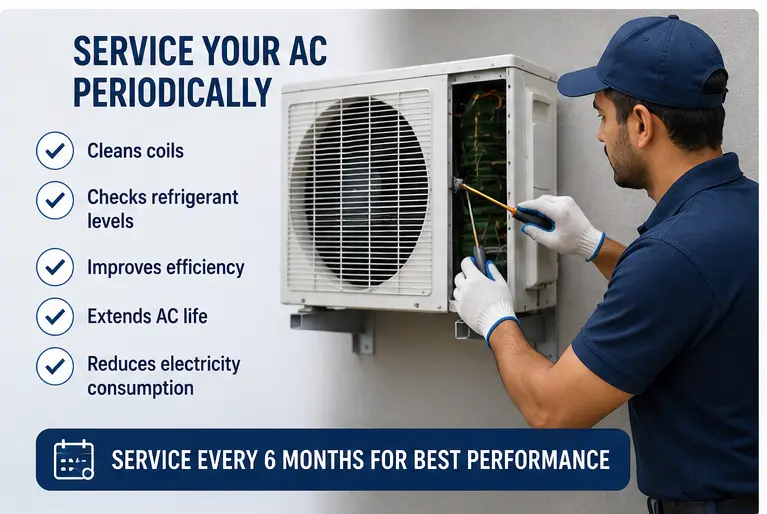
Regular Servicing helps Maintain Efficient Operation.
Professional Maintenance may Include:
- Cleaning Condenser Coils
- Checking Refrigerant Levels
- Inspecting Electrical Components
- Cleaning Internal parts
Ignoring Maintenance can Gradually Reduce Cooling Performance and Increase Electricity Consumption.
9. Avoid Additional Heat Sources
Electrical Appliances such as Ovens, Irons, or High-Power Lighting can Increase Room Temperature.
Reducing unnecessary Heat Generation allows your AC to Maintain Comfortable Temperatures more Efficiently.
Simple Habits Include:
- Switching off unused Electronics
- Using LED Lighting
- Avoiding Heat-Producing Appliances during peak afternoon Hours when Possible
10. Invest in an Energy-Efficient AC
If your Existing AC is very Old or you’re Planning a New Purchase, choosing an Energy-Efficient model can Help Reduce Long-Term Electricity Consumption.
Modern Inverter ACs and Higher BEE Star-Rated models are Generally Designed to use Electricity more Efficiently than Lower-rated Alternatives.
However, actual Savings Depend on:
- Usage Hours
- Room Conditions
- Maintenance
- Electricity Tariff
- Temperature Settings
Choosing the Right Star Rating should be part of an overall Energy-Saving Strategy rather than the only Factor.
While Buying a Higher-Rated AC can Reduce Electricity Consumption, your Daily usage Habits are Equally Important. Our Guide on 3 Star vs 4 Star vs 5 Star AC: Which One Saves More Electricity? Explains the Differences in Detail.
Frequently Asked Questions
Not necessarily. It mainly Instructs the AC to reach a Lower Target Temperature, which may Increase Electricity Consumption.
For many Households, 24°C to 26°C provides a Practical Balance between Comfort and Energy Efficiency.
During Heavy Summer use, Checking and Cleaning Filters every Few Weeks can Help Maintain Efficient Operation. Always Follow the Manufacturer’s Recommendations.
Regular Maintenance helps Keep the System Operating Efficiently and may prevent Performance Losses caused by Dirt or Neglected Components.
Beat the Summer Heat with our Carefully selected List of the Best Cooling Gadgets for Summer in India for your Home and Office.
Final Verdict:
Reducing your AC Electricity Bill doesn’t always Require Expensive Upgrades or Sacrificing Comfort. Small Habits such as Setting a Sensible Temperature, Cleaning Filters, Keeping Doors and Windows Closed, and Servicing the unit Regularly can Improve Efficiency over Time.
If you’re Planning to Purchase a new Air Conditioner, also consider its Energy Efficiency and Star Rating. Combined with Smart Daily usage Habits, these Practical tips can Help you Enjoy a Cooler Home while making better use of Electricity.
Pingback: BLDC Fan Explained: What Is a BLDC Fan & Is It Worth Buying in 2026?
Pingback: Air Fryer Buying Guide: How to Choose the Right Air Fryer in India (2026)